The Last Human Mile
Humanizing Customer Service in a Tech-Driven Era
Executive Summary: As artificial intelligence resolves routine work, organizations can direct human judgment toward complex, emotional, consequential, exceptional, and relationship-sensitive interactions. Strong results emerge through purposeful routing, complete customer context, clear authority, workforce capability, and accountable human ownership.
Executive teams gain a practical model for identifying high-value interactions, strengthening AI preparedness, improving handoffs, aligning employee capability, and measuring enterprise return.
Every successful automation initiative reshapes the work remaining for people. Routine requests move toward self-service, automated workflows, and AI-supported resolution. Employee involvement increasingly centers on ambiguity, urgency, consequence, exceptions, and relationships.
For CEOs, business owners, and HR directors, this shift creates a strategic opportunity. Technology investment expands organizational capacity. Executive direction determines where that capacity strengthens service, protects revenue, builds workforce capability, and supports responsible growth.
Consider a delivery failure on the day of a critical event. A digital assistant can retrieve an order, confirm tracking history, present approved options, and summarize prior activity. A capable employee can recognize urgency, interpret policy, coordinate an exception, preserve trust, and remain accountable through resolution.
Digital capability and human judgment belong in one coordinated service design. The Last Human Mile is where accountable human ownership improves the moments that matter most.
The Last Human Mile is the point in a technology-enabled customer interaction where human awareness, informed discretion, accountable action, or relationship continuity materially improves the result for both the customer and the organization. It may occur at the beginning of an interaction, during a digital-to-human transition, or at final resolution. Customer circumstances, business stakes, and interaction complexity determine the right route.
Where can human expertise create the greatest customer and enterprise value?
The Last Human Mile Framework
Five conditions reveal where high-value human involvement can improve the result:
Complexity: Interpretation, context, ambiguity, or coordinated action shapes resolution.
Emotion: Concern, urgency, disappointment, uncertainty, or personal significance influences the experience.
Consequence: Financial, safety, compliance, reputational, loyalty, or long-term stakes elevate importance.
Exception: A customer’s circumstances fall outside a standardized pathway.
Connection: Recognition, continuity, personalization, or trust affects the outcome.
Together, these five conditions give senior teams a disciplined method for matching customer needs with the appropriate channel, employee capability, and level of decision authority.
Automation delivers speed, availability, and consistency for familiar requests. AI augmentation expands access to knowledge, summaries, workflow guidance, and pattern recognition. Accountable human ownership adds interpretation, discretion, coordination, empathy, and sustained responsibility.
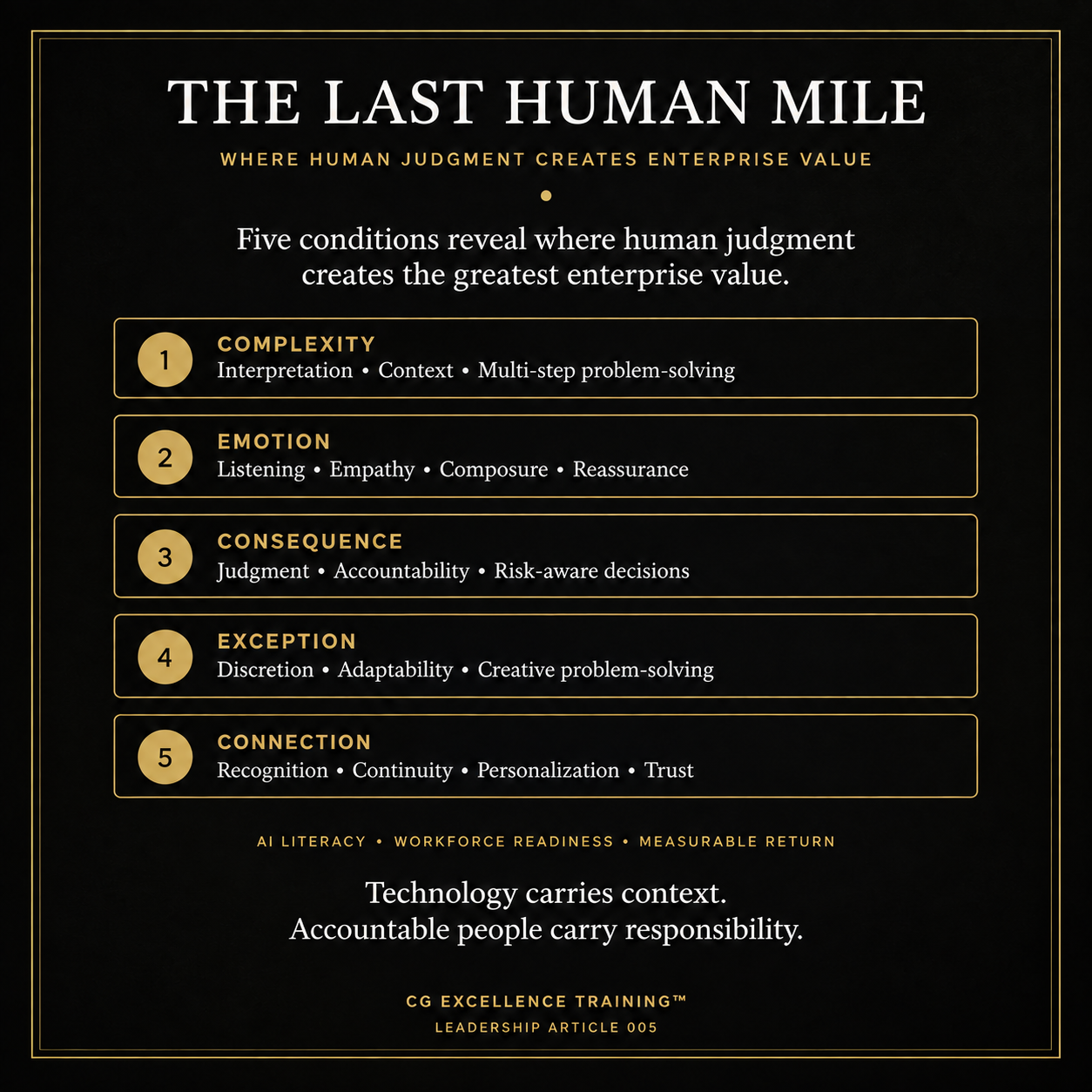
Figure 1. Five conditions reveal areas where informed judgment can create meaningful enterprise value.
Why the Last Human Mile Matters Now
Generative AI is changing the composition of service work. As routine requests move to self-service, automated workflows, and AI-supported resolution, employees increasingly receive interactions carrying greater ambiguity, emotional significance, commercial impact, or coordination demands.
A peer-reviewed study of 5,172 customer-support agents found that generative-AI assistance increased issues resolved per hour by 15% on average. The strongest gains occurred among less-experienced and lower-skilled employees. The findings show how AI can accelerate knowledge access, learning, and performance in familiar work while employees apply judgment in more complex situations.
A 2026 paper authored by Nubank researchers reported that a card-delivery deployment achieved a 37-percentage-point improvement in AI transactional Net Promoter Score and a 29-percentage-point increase in self-service. The results followed an evaluation-driven approach that combined customer context, human review, production testing, and ongoing measurement.
Together, these findings point toward a shared leadership opportunity: create an operating model in which digital systems, AI guidance, and employee expertise reinforce one another.
Automation creates capacity. Executive direction converts capacity into value.
Intentional Routing
Purposeful experience design begins with allocation: determining where digital completion is appropriate, where AI should augment an employee, and where accountable human ownership is required.
Digital completion serves routine requests with clear intent and defined outcomes. Automated pathways provide speed, consistency, and convenient access, while pattern monitoring supports ongoing improvement.
AI-assisted employee support strengthens familiar work requiring knowledge interpretation, context, or explanation. Employees can verify guidance, explain options, apply relevant context, and complete resolution with greater confidence.
Accountable human ownership serves interactions carrying elevated emotion, consequence, exception, or relationship significance. Capable employees interpret circumstances, make informed decisions, coordinate resources, and follow through until the customer’s situation is resolved.
The goal is not more human involvement in every interaction. It is better use of human judgment where it can materially change the customer and business result.
Routing decisions improve when employees receive complete customer context. Priority interactions require access to customer history, prior actions, commitments, policy guidance, current intent, and specialist resources. With this context, employees can begin from the customer’s current circumstances and move directly toward resolution.
AI Literacy and Preparedness
AI literacy equips employees to interpret AI-supported guidance, verify information, recognize uncertainty, protect sensitive data, and escalate decisions within defined authority. It also supports responsible use through source evaluation, privacy awareness, bias recognition, and clear accountability.
Organizational preparedness aligns governance, data quality, role design, learning, manager coaching, decision rights, and performance measures before deployment expands. Prepared teams understand approved uses, verification expectations, escalation standards, and ownership boundaries.
Executive roles carry distinct responsibilities:
CEOs connect AI investment with organizational strategy, customer value, and risk oversight.
Business owners align adoption with service commitments, operational scalability, and financial return.
HR directors translate transformation into role profiles, learning pathways, performance expectations, and career development.
Managers coach judgment, calibrate discretion, support recovery, review AI-assisted decisions, and reinforce end-to-end accountability.
Manager capability deserves particular attention. Managers need practical methods for coaching judgment, calibrating discretion, supporting customer recovery, reviewing AI-assisted decisions, and reinforcing end-to-end accountability.
Workforce Readiness and Continuity
Four capability domains support high-value service work:
Judgment: Contextual interpretation, verification, discretion, and sound decisions.
Human connection: Clear communication, empathy, recovery skill, and relationship stewardship.
Cross-functional coordination: Resource navigation, collaboration, and escalation management.
Responsible AI use: Effective use of retrieved knowledge, recommended actions, customer summaries, and risk prompts within established boundaries.
Customer continuity carries history, intent, prior activity, commitments, ownership, and progress across channels. A well-designed digital-to-human transition gives employees a complete picture and supports confident action. Customers receive recognition, employees gain clarity, and the organization strengthens resolution quality.
Technology carries context. Accountable people carry responsibility.
Five Conditions in Practice
The Last Human Mile framework becomes operational through defined responses, supporting resources, and purpose driven business measures.
Complexity
Complexity arises when a customer’s circumstances require interpretation, competing priorities must be reconciled, or multiple actions must be coordinated. Support employees with integrated knowledge, specialist access, coordination tools, and sufficient resolution time.
Useful measures include first-contact resolution, decision quality, and recontacts.
Emotion
Emotion matters when concern, disappointment, urgency, uncertainty, or personal significance shapes the customer experience. Strengthen listening, composure, reassurance, empathy, and recovery capability.
Useful measures include recovery satisfaction, post-escalation customer sentiment, and complaint recurrence.
Consequence
Consequence rises when an interaction affects safety, finances, compliance, reputation, loyalty, or long-term customer value. Provide clear authority, safeguards, subject-matter access, and executive oversight.
Useful measures include accuracy, remediation rate, risk events, retention, and revenue protected.
Exception
Exception occurs when a customer’s circumstances fall outside a standardized pathway. Define discretion guidelines, efficient approval paths, and clear escalation standards so employees can respond without avoidable delays.
Useful measures include exception-resolution rate, transfer volume, time to meaningful resolution, and recurring exception patterns.
Connection
Connection matters when a relationship depends on recognition, continuity, personalization, or trust. Preserve customer preferences, history, commitments, and relationship ownership across channels.
Useful measures include customer-reported recognition, continuity, retention, share of wallet, and lifetime value.
Together, these measures reveal which interactions deserve focused investment and executive attention.
Economics and Governance
Service transformation creates enterprise value through productive capacity, revenue protection, customer confidence, workforce performance, and risk management. A complete investment case accounts for each category and connects operational improvement with measurable outcomes.
A useful executive measure is resolved customer value per total service dollar: the value of completed, accurate, relationship-preserving customer outcomes relative to the full cost of digital channels, employee support, and the resources that enable both.
To build a credible financial review, consider:
Customer volume affected by the priority interaction.
Priority-condition rate and affected-customer rate.
Average customer or relationship value.
Repeat-demand, transfer, escalation, recovery, and concession costs.
Revenue exposure and other business significance.
Low, base, and high decision estimates.
Assign each exposure to one category only, saved revenue, retention, recovery cost, or repeat-demand cost—to avoid double counting. Evidence-based assumptions create a credible decision range and support sound financial interpretation.
Decision ranges support disciplined investment conversations and practical return-on-investment planning. Segment findings by interaction type, customer value, complexity, risk, and channel to identify where the greatest opportunity or exposure exists. Regular measurement helps sponsors track efficiency gains, resolution quality, retention, operating exposure, and progress toward targeted outcomes.
The Last Human Mile is an enterprise operating model, not merely a customer-service initiative. Its success depends on alignment across operations, customer experience, HR and learning, technology, data, finance, risk, compliance, and frontline teams.
A cross-functional service council can review routing thresholds, recurring failure patterns, readiness priorities, customer-impact measures, AI governance, and investment decisions. Shared oversight connects channel strategy, employee authority, service commitments, and financial accountability.
Signals for Executive Review
A focused review is warranted when several of the following patterns are present:
Customers repeat information during digital-to-human transitions.
Employees frequently seek approval for familiar exceptions.
Complex cases move through multiple transfers or teams.
AI guidance reaches employees before verification and escalation training.
Success measures emphasize speed, containment, and contact cost while broader customer outcomes receive limited visibility.
If three or more signals are present, treat this as a strong reason to review how the organization routes, supports, and governs priority interactions.
Five Questions for Executive Discussion
Where do employees enter a priority interaction too early, too late, or without the authority needed for complete resolution?
Where does customer context weaken across channels, teams, or systems?
How closely do employee capability, accountability, and incentives align with the work employees now receive?
How fully does the investment case account for operational flexibility, revenue protection, workforce readiness, customer outcomes, and risk reduction?
Who owns the end-to-end result across technology, policy, process, and human judgment?
The answers reveal opportunities for stronger experience design, workforce preparation, executive alignment, and operating discipline.
Executive principle: The highest-value human moments arise where capable judgment materially improves customer and business outcomes.
From Insight to Action
Begin with one priority interaction. Gather 30 to 90 days of available evidence. Assess complexity, emotion, consequence, exception, and connection. Quantify customer and operating exposure. Evaluate workforce readiness. Then select one routing or handoff improvement supported by clear ownership and measurable progress.
The Last Human Mile Leadership Workbook converts the five-condition framework into a coordinated executive working process.
Teams use the interactive workbook to:
Rank high-value service interactions through the five-condition model.
Calculate low, base, and high financial exposure.
Clarify digital completion, AI augmentation, and accountable human ownership.
Assess judgment readiness, decision authority, customer continuity, and organizational conditions.
Establish shared measures for resolution, retention, productivity, risk, and return.
Build a focused 30-, 60-, and 90-day implementation plan.
Produce an Executive Decision Summary for sponsor review.
The completed workbook gives executive sponsors a concise record of priorities, financial exposure, ownership, progress measures, and next decisions. Cross-functional teams gain a shared language for implementation, alignment, and accountability.
Equip your team to align and measure enterprise value in the customer interactions where human judgment matters most. Explore individual, team, and organizational licensing for The Last Human Mile Leadership Workbook.
Format: 23-page fillable PDF
Access: Immediate digital download.
Designed for: CEOs, business owners, HR Directors, managers and L&D leaders
Individual Participant License: $28
Purchasing for a leadership team?
The workbook is available for leadership teams and organizational use.
For 50 or more participants, multi-location distribution or expanded internal use, Contact CG Excellence Training™ and discover customized recorded training resources aligned with service priorities, workforce needs, leadership-development goals and organizational objectives.
Convert insight into measurable action.
Thank you for your kind attention today. I hope these perspectives encourage a closer examination of where human capability creates its greatest value and inspire purposeful leadership action to preserve, develop and position that capability where customers need it most.
Sources
Brynjolfsson, Erik; Li, Danielle; and Raymond, Lindsey R. “Generative AI at Work.” The Quarterly Journal of Economics, Volume 140, Issue 2, May 2025, pp. 889–942. The peer-reviewed study examined 5,172 customer-support agents and found a 15% average increase in issues resolved per hour with AI assistance.
Gupta, Aman; Rossell, Kevin; Alcobaça, Edesio; and colleagues. “Building Customer Support AI Agents at 100M-User Scale: An Evaluation-Driven Framework.” Proceedings of the 32nd ACM SIGKDD Conference on Knowledge Discovery and Data Mining, 2026. The company-authored research describes evaluation-driven customer-support deployments at Nubank, including card-delivery results.
About the Author
Christine George is the founder of CG Excellence Training™ and develops leadership frameworks, recorded training resources, and implementation tools focused on workplace culture, customer experience, employee capability, and enterprise performance.
© 2025–2026 Christine George LLC | CG Excellence Training™. All rights reserved.